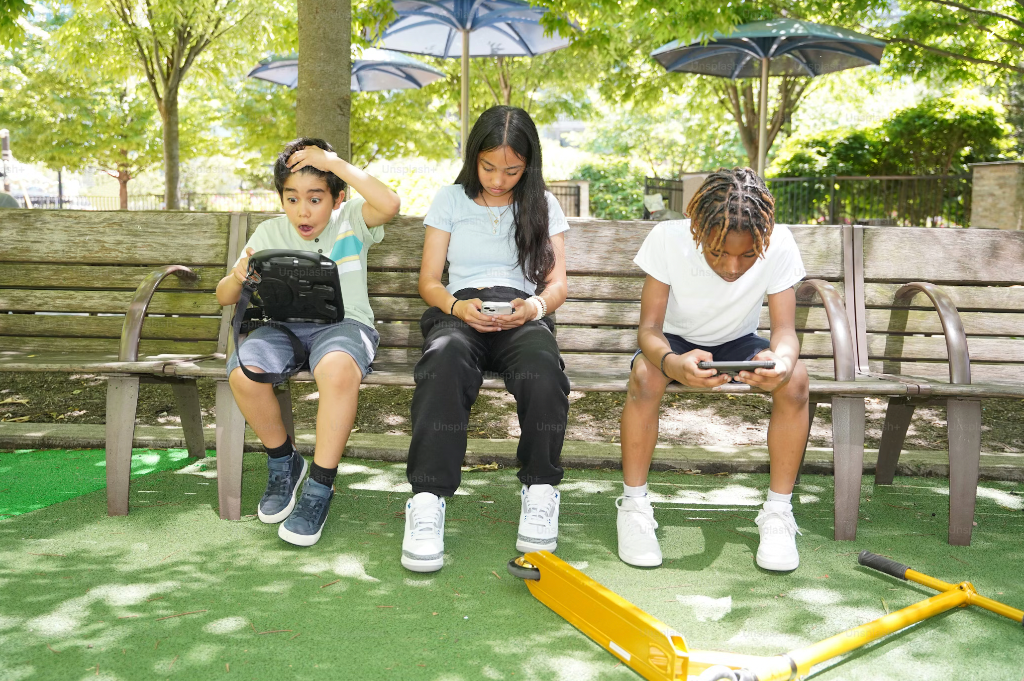
According to the National Institute of Health, approximately 95% of teenagers across the United States are on at least one social media platform. Mainstream apps such as TikTok, YouTube, Instagram, and Snapchat are the most prominent for young teenagers and preteens as young as 11.
With such widespread use, social media has become a primary space where teens interact, often replacing or reshaping traditional face-to-face communication.
These platforms create new relationships, influence social dynamics, and create environments where immediate and far-reaching interactions occur. Sometimes, they are supportive, but other times, they are superficial and, in many cases, harmful.
For instance, it's now common to see groups of teenagers sitting together at dinner, their faces illuminated not by conversation, but by the blue glow of their phone screens. Though they appear together, their attention is often elsewhere, pulled into the digital world.
Moments that were once about enjoying each other's company now shift into checking Snap Maps to see where others are, driven more by curiosity about what they're missing than by appreciation for the people they're with.
"People also avoid certain places if someone they don't like is at the mall or something, they just won't go there because that person's location is there," said a junior student.
This constant digital awareness not only shifts how teens behave in group settings but also begins to affect their relationships and decisions. The same tools meant to keep people connected can just as easily lead to avoidance, suspicion, and miscommunication in both platonic and romantic contexts.
For instance, with apps like Snapchat and Instagram, users can see when someone was last active on the platform. This means you can see if someone is using Snapchat, for example, and you sent a text an hour ago while they were active 10 minutes ago.
In many cases, this can lead someone to overthink simple situations, create anxiety, and cause panic. In an age where 20% of children ages 12-17 have a diagnosed mental health disorder like anxiety or depression, not accounting for all those left undiagnosed, this type of unnecessary stress is more harmful than people realize.
As a teenager and active on most social media platforms, I can confidently say I'm not the only person who's experienced this. Maybe you thought someone was mad at you, you texted them asking if everything was okay, and you checked your phone an hour later, but there was no response. The person you texted is active.
You spiral, rethinking every interaction you've had with them the whole day, doubting yourself, and getting distracted from your work.
"When I try to do my homework, I always pick up my phone every five minutes to see if one of my friends responded," said another student.
Beyond comparison, social media also amplifies feelings of exclusion, often in ways that feel both personal and public.
Fear of missing out (FOMO) isn't just a buzzword; it's something many teens experience daily. Whether it's seeing a private story they weren't added to or realizing everyone hung out without them, apps make it painfully obvious when you're left out.
It's not just about not being invited; it's about knowing, in real-time, that others are together—and you're not. This kind of exclusion can cut deeper when it's so visible, sparking feelings of loneliness, insecurity, and self-doubt.
Combined, these feelings can be painful and overwhelming, silently bringing kids down in a time when they should be learning, exploring, and most importantly, building new connections.
Social media hasn't just changed how teens communicate; it's rewritten connection rules. When was the last time a teenager asked for a phone number? These days, it's almost always, 'What's your Snap?' Relationships now start with a streak, not a conversation.
Instead of phone calls or being asked out face-to-face, we sit staring at screens, waiting for a blurry selfie from someone we like, something shallow to hold onto in place of something real.
"I met my boyfriend through a quick ad on Snapchat, and we had like a 50-day streak before we said anything to each other," said a female student.
In my experience, I haven't seen many kids my age using the actual text message app in ages. Maybe it's because Snapchat chats are deleted after 24 hours; it feels easier to say something because you know it will disappear. But this sort of programming brings a whole other set of problems to the table.
There's a false sense of invincibility; people feel free to say anything because, after all, 'it disappears in 24 hours.' That temporary window makes it easier to cross lines without accountability.
A study published by Bright Path Behavioral Health reports that 26.5% of American teenagers (aged 13 to 17) were the victims of cyberbullying in 2023. This is an increase from 23.2% in 2021.
But even if the message disappears, the impact doesn't always go away. What might seem like a quick comment or inside joke can still hurt and tend to linger longer than intended.
It's an endless and perpetuating cycle of emotional pain and isolation. This cycle of virtual harm often spills over into real life, affecting relationships, academic performance, and overall well-being.
It's become a disturbing reality that social media and other forms of media have completely altered the social dynamics between teenagers and young adults.
To break this cycle, we need to rethink the way we interact and engage with social media, not only as individuals but more importantly as a community.
First, from a young age, we must encourage media and digital literacy, helping the new generation understand how to use platforms responsibly and navigate emotional online relationships.
Additionally, it's our job to foster conversations about the consequences that come with social media usage in high doses, and teach youth how to set healthy boundaries between their real life and internet exposure.
Platforms themselves should consider tools that encourage taking breaks from long hours spent scrolling and work to discourage behaviors like cyberbullying, harassment, and exclusion.
Ultimately, change can only happen when we shift the focus from using social media as a tool for validation or comparison to using it as a platform for connection, understanding, and kindness.
If we can teach teens how to navigate these digital spaces with awareness and care, we can begin to mitigate the lasting effects of online harm and rebuild healthier, more authentic relationships in both the virtual and real worlds.
Share this post